Analog in a Digital World
It’s all well and good simply snapping away with a digital camera and letting the auto-focus (AF) do the business, if you step back a little, and use manual focus, the process takes in a subtly different perspective.
Yes, if you’re so inclined you can manually focus an auto-focus lens. But another way of doing this, especially if you’ve a 35mm SLR lurking in a cupboard with a few lenses, or if you can borrow one from older relations maybe, is use the manual focus lenses from that on your digital SLR or virtually any interchangeable lens digital body.
It didn’t take long before some bright souls created what in essence is a simple metal tube, with a mount for maybe M42, or Pentax K at one end, and a bayonet mount at the other to attach it to a digital camera. There’s a bit of maths involved, and some engineering.
The advent of mirrorless camera bodies made life even easier, simply because the distance between the sensor plane and the back of the lens is much less than it was on a conventional DLSR, so you don’t need an adaptor that’s wafer thin. On a DSLR to all intents, the body was a similar size to a 35mm AF camera, but where the film used to sit was your sensor. It’s that distance between the surface of the lens that faces the film or sensor which is critical.
Note I’ve said AF 35mm camera, manual focus bodies are usually a deal smaller! The switch to AF also saw bulkier camera bodies and hence the switch to more plastics in the construction, mainly in order to keep the weight down after packing them with electronics and batteries, well before Lithium-Ion was a thing.
All lenses are designed to focus the incoming light onto a flat plane at a know distance. This is called the FFD, Flange Focal Distance. This measurement varies between manufacturers and mounts, and possibly by more than you might think, especially in the mirrorless domain.
As an example, the Contax/Yashica mount lenses I’ve been playing with here, have an FFD of 45.5mm. To adapt these to the Fuji X mount on either of my Fuji bodies, which have an FFD of 17.7mm, elementary maths says you need to sit the back of the lens glass at 45.5 – 17.7mm away from the sensor, i.e 27.8mm.
Because there’s no electronics or software involved with manual focus lenses, what you get is an adaptor that’s a metal tube, with a C/Y socket at one end to accept the lens, and a bare contactless Fuji X bayonet at the other.
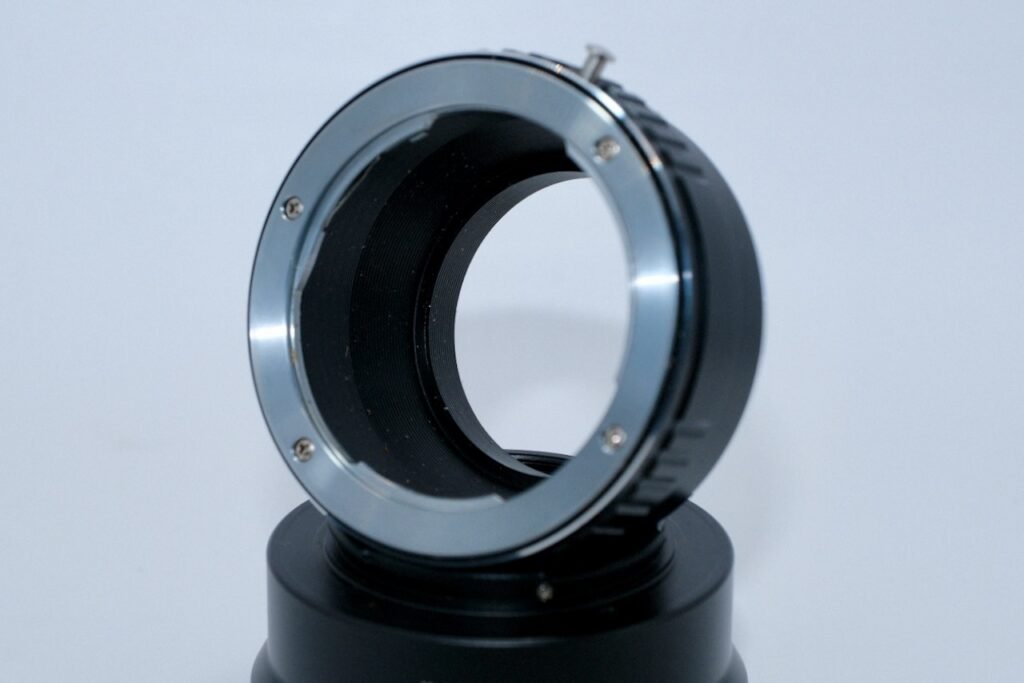
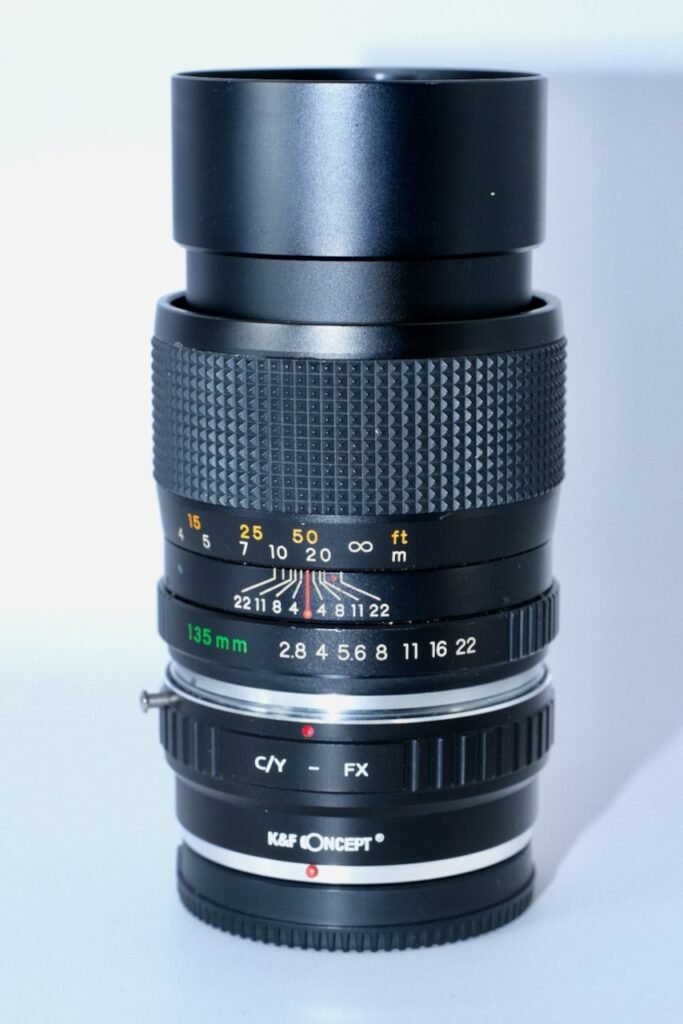
On the camera, to enable this to work, you have to find the setting that says something like “shoot without a lens”, because without any electronics in lens itself, let alone a focus motor, or in the adaptor, the camera doesn’t have a clue what you’re doing and you have to force it to play along.
With all the effort and expense involved with auto-focus lenses, why you may ask, would you want to use a manual focus lens? It’s photography, and the look of the image is everything. Fiddling around in software is all well and good, but only classic glass can capture an image a certain way. Some lenses have become legendary for this reason, Zeiss and Leica again feature strongly, but also lenses originally designed for cinema work have gained a following for the same reason.
The other reason is much simpler: It’s fun!
What you do need to be aware of is, if you’re using an APS-C or Micro 4/3 (MFT) body, as opposed to full frame, you’re still subject to crop factor calculations when working out the actual focal length of the lens you want to try, because 35mm film is full-frame. (I always find it funny that I can slip my 35mm and hence full-frame Olympus XA into my jeans pocket, but they’ve yet to manage the same with a full-frame digital!)
As a result of crop factor, which for APS-C is x1.5 (or x1.6 if you’re a Canon use, on MFT, the crop factor is 2x.) my small collection of Contax/Yashica mount lenses equate to the following:
28mm f2.8 = 42mm (which becomes the standard lens)
50mm f1.7 = 75mm (So potential as a portrait lens)
135mm f2.8 = 202mm (A fast telephoto, keeping it steady will be key, but IBIS on both my Fuji bodies will still work)
The results?
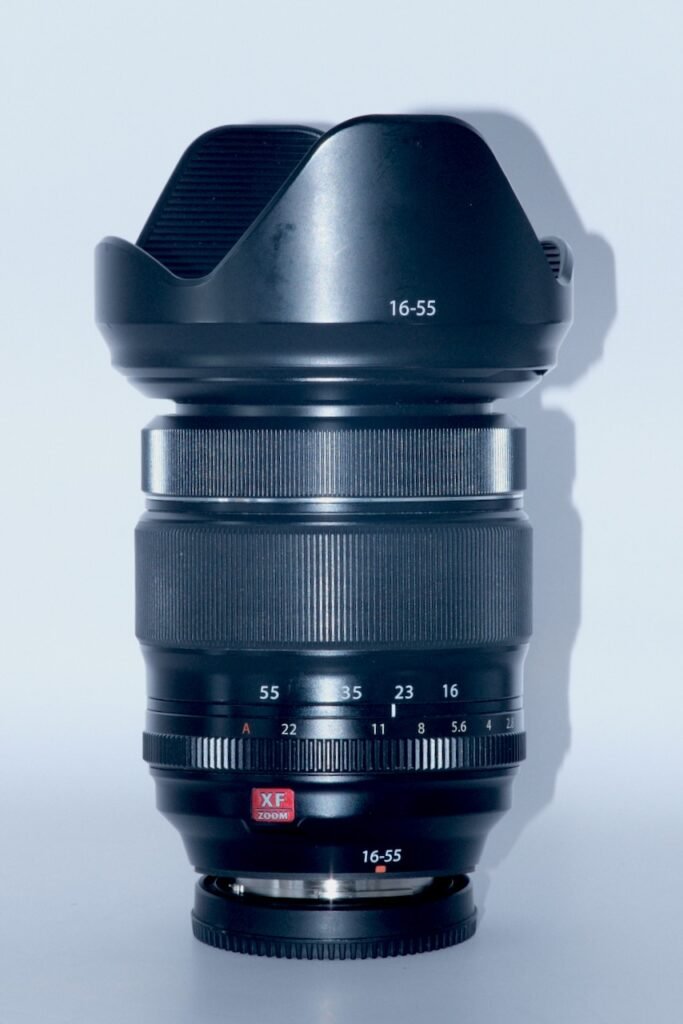
Admitted, all the original shots have had to be reduced in quality and size somewhat to get them online, but considering the last image is taken on a 40MP APS-C sensor using a manual focus lens that’s 40 year old, it’s not bad!
Now the renovation of my latest Yashica body is complete, I’m aiming to take it and it’s lenses out to run a roll of film through it, and to try the lenses on one of my Fuji’ at the same time, just to see how it compares.